

Programme Overview
Our Certificate in Strategic Learning and Development is an 11 month programme for anyone who has L&D experience or skills, and is in role where they will be running a learning function. If you are new to L&D, the the Certificate in Learning Fundamentals would be the better option.
Over the course you can attend workshops, watch videos, read articles and complete online learning modules and assignments and get coaching and feedback from our team.
The programme also involves assessing your achievement level from the start to the finish.
Who should register?
You’ll benefit most from the Certificate in Strategic Learning and Development if you are in a role which is responsible for running effective training programmes. You may be:
- An L&D or OD Advisor who is stepping up into a leadership role
- Have completed technical training in designing and running training (like our Certificate in Learning Fundamentals) but now want to learn how to be a strategic business partner
- An L&D Partner or leader wanting a practical qualification to compliment your experience.
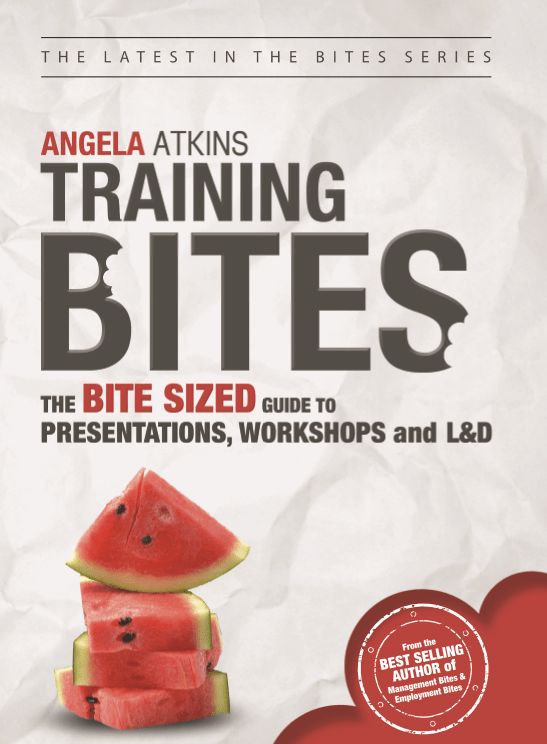
Through the Certificate, you’ll also be provided with chapters from Training Bites to read through. Written by best-selling author Angela Atkins, Training Bites is now only available for those completing the L&D Certificates. It covers many of the topics in the Certificate, with practical examples and stories of what went right and wrong!
What will you finish with?
The Certificate in Strategic Learning and Development is different from tertiary study as we cover real life, rather than just covering theory. It’s full of practical suggestions and ideas to use. You’ll work through each module, with real case studies and assessments to test you are applying what we’ve covered. Once you’ve completed your final assessment you will be awarded your certificate.
Elephant Certificates are now recognised globally, in New Zealand, Australia, the Pacific Islands, Singapore, Malaysia, Canada, the US and United Kingdom.
Core Modules
These modules are compulsory. If you have advanced training or experience in one of these areas, then you can apply to have this module exchanged for an optional module.
Introduction to Strategic Learning
First you’ll cover the different Learning and Development roles and the challenges that can face you in your career. You’ll also complete a skills assessment and your first assignment will focus on strategic learning.
Developing a Learning Strategy
This module looks at the different frameworks for developing a learning strategy and how to present it to your senior leaders. This includes analysing a case study to test if your learning strategy would work.
Managing Learning Programmes
Managing an existing learning programme with multiple courses, and audiences – has a range of skills attached. This module covers all aspects of learning measurement and management including analysis of different case studies.
Building a Learning Culture
You can have the best learning programmes in place but may still find the L&D team have to drive learning. Building a Learning Culture focuses on how to change that to embed learning and engage your business.
Leadership Capability
One of the key areas many L&D and OD professionals are responsible for is building leadership capability across an organisation, and often at different leadership levels. This module covers different models and tools and real life examples.
Leading Change
Whether it’s a new LMS, or new learning programmes, or development planning – this module covers the different models you can use to lead a change initiative to make sure it’s successful.
Engaging your Managers (and learners)
You might have the best learning programmes in the world, but they’re meaningless if you can’t get managers and employees engaged in learning! This module covers tools to engage your learners.
Optional Modules
You need to choose two optional modules from the following:
Learning Metrics and Analytics
Knowing what to measure as part of your training ROI (return on investment) and how to take these metrics into being predictive analytics, can be essential to getting your learning programmes signed off and to check they are effective. This module covers how.
Performance Coaching
Whether part of leadership development, L&D programmes or as a tool to use when advising and supporting a business, understanding and using the principles and models of performance coaching can be very valuable. This module covers key principles and how to use them.
OD Models and Tools
There are a number of organisational development models and tools that are useful for L&D professionals to know and use. This module covers what they are, and how to use them for different parts of your HR, L&D or OD processes.
Business Acumen
This module covers the 4 key elements to having great business acumen. Financial understanding and then legal, industry and commercial knowledge (FLIC). You’ll learn how you can upskill each to build credibility with senior leaders.
OD Psychology 101
There are a number of Industrial Organisational (IO) Psychology principles that are useful for anyone working in learning to understand. Using key methodology and practises mean you can put in place solutions that address the root cause of issues.
Fundamentals module
If this is an area of the Certificate in Learning Fundamentals that you feel you haven’t got enough training or experience in, you can choose one of those as one of your optional modules.
Register to start the Certificate in one of our three intakes during the year: March, June or October. Each intake starts with a virtual session so you can meet others in your intake, and discuss challenges before you start on your first module.
The Certificate is scheduled over 11 months however you can defer completion by a further 6 months due to work or other circumstances.
Please do let us know if you have any questions. Unfortunately we cannot issue refunds once you have started your study.
What recent graduates say:
I now think about learning and development more from the learners point of view. Always thinking what will they want to leave the session knowing, what are the learning objectives and how do I create this in my learning. Also being more mindful of how to communicate material and using a clear template, clear fonts, images that align to the content. I have also used the template provided within this course to map out the content, timings, activities and what learning style I am talking to. It was always good to get the feedback and it was always positive with constructive feedback around where additional information was needed. I would say I am most proud of being able to take the learnings from the certificate and actually apply to my role.
Rachel, HR Advisor, PGG Wrightson
This certificate has exposed me to different parts of Learning & OD. In particular it has given me visibility of the OD functions. When I was in the L&OD team my focus was around the Learning aspect. I now have clarity on how these roles would work together and deliver the best outcomes for our team in our branches. My biggest improvement has been in the facilitation of content that’s not mine. I am going to work on pausing when doing things and go back to review resources that I have available – like all the resources from this certificate.
Nadia, Learning Business Partner, Hardware Retail Chain
The feedback I received was always constructive and useful. I was most proud of getting the assignments done in such a busy time in my industry! The assignment I am most proud of is the Leading Change assignment. This really got me thinking about the change approach in my work. I will refer back to many of the principles and tools I have experienced in this programme.
Melita, Capability Development, District Health Board
It makes you think in terms of that every organisation’s structure, strategies, and priorities are different on their approach to L&D, learning culture, career paths, competencies, values, and change. Sometimes it’s not about the people more about the bottom line or cost savings etc. This is from my perspective of organisations I’ve worked, but it’s not all bad. It does give you an insight as you work through the assignments what matters to you.
Sarala, Learning Experience Designer, Retail Chain
FAQ’s
How do the modules work?
The Certificate is hosted on our online learning platform. Once you’ve registered, you’ll be able to access the programme. The welcome module is available immediately, and then each month a new module will open up. You’ll then be able to access the video’s, articles, learning resources and your assignment. This is due back at the end of each month.
And the assignments?
The assignments consist of case studies with different questions to answer or asking you to review of your own processes. The pass mark is 70%. Our team will assess whether you have passed and have demonstrated good thinking around each answer. If not, they will come back to you with some coaching and feedback. You can then resubmit. The aim is to help you develop your skills in each area so you can deliver excellence to your business.
How long does each module take?
You have a month to complete each module and it will take you 2 – 5 hours to complete depending on if you have any experience or knowledge in the area already. Along with watching the webinar and reading any articles, you should be able to complete each module by putting aside an hour a week, or four hours a month.
What if I need more time?
While we schedule your Certificate over an 8 month period, however you can ask for an extension on assignments if you have a busy workload, or are travelling or have any other issue that means you need more time. In total you can extend your Certificate up to 6 months.
Can I fail the Certificate?
Yes if you don’t complete your assignments, then you cannot pass the Certificate! If you complete an assignment but haven’t demonstrated the knowledge to pass the topic, our team will provide you with feedback and coaching and give you a chance to review and resubmit your assignment.
What if I’m stuck?
If you do get stuck on an answer, then you can email our team and get some further suggestions or coaching to help you gain the knowledge needed to answer.
About Elephant Group
We work to three main principles:

Get in touch
The best way to get in touch is to email us and the right person from our team will come back to you.
Elephant News
Our newsletter is loved because we pack it with case law, quizzes & tips – but not too much! To subscribe to the NZ edition click here.
Read the blog
For musings on HR and people management, check out Angela Atkins popular blog. Click here to have a read. Or check out the Elephant blog.
 Elephant Group